

Materials · 8 min read
Window Treatments for Arched Windows: What Actually Works
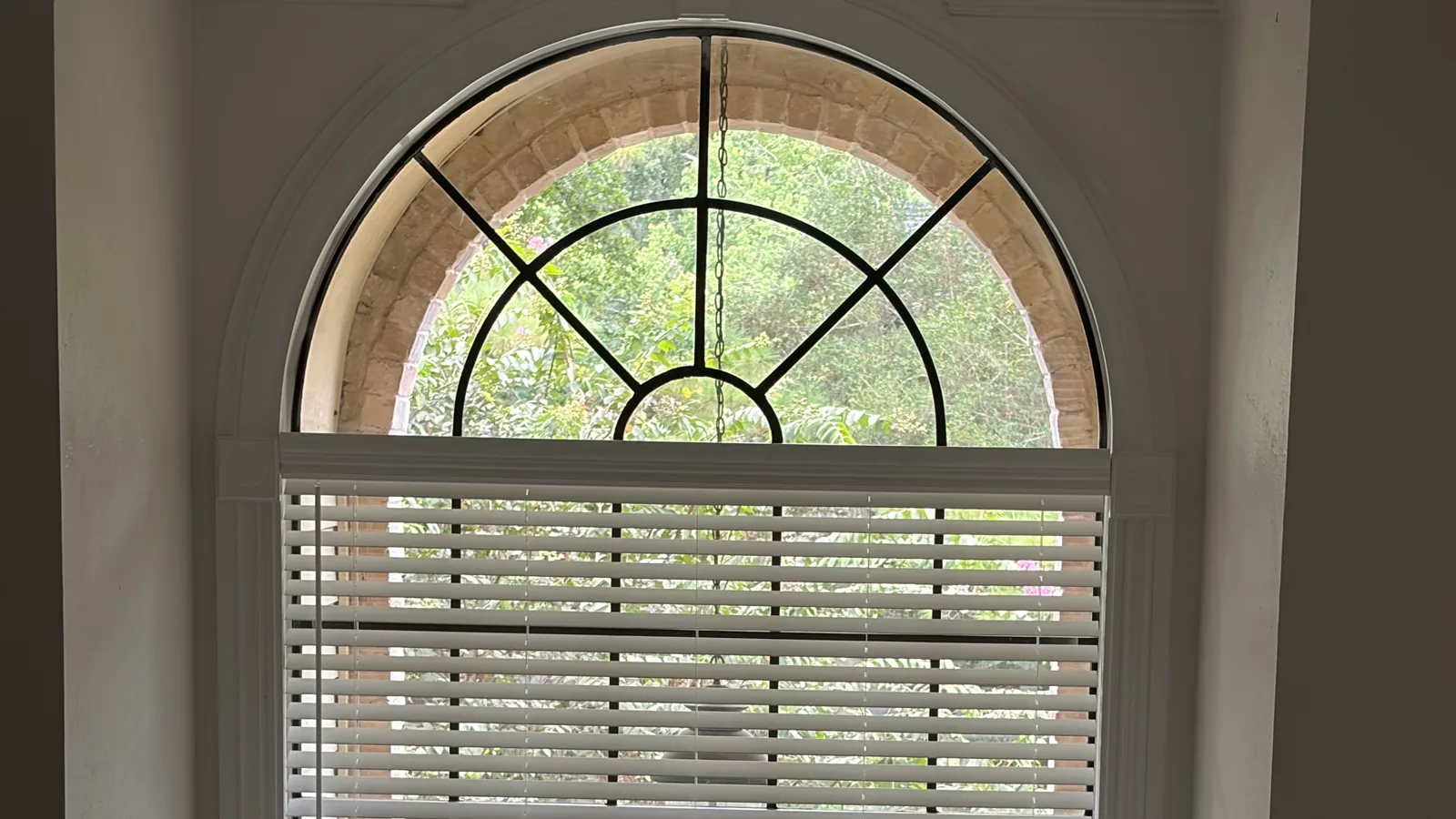
Arched windows look simple until it is time to cover one. The curve is part of the architecture, which means the treatment has to control light and privacy without making the window feel like an ordinary rectangle.
After years of measuring specialty shapes around Houston, we usually narrow the decision to three practical directions: fit the curve with shutters, use a specialty honeycomb solution, or cover only the rectangular portion and deliberately leave the arch visible.
First decide whether the arch needs to be covered
Before choosing a product, ask what the upper glass is doing to the room.
- Does direct sun create glare or heat?
- Can someone see through the arch from outside or from a neighboring property?
- Does the room need darkness for sleep or a screen?
- Is preserving the shape more important than controlling every part of the glass?
- Do the lower windows already have treatments that the arch should match?
An arch high above eye level may not create a privacy problem at all. The same shape on a west-facing bedroom can be the brightest and hottest part of the opening. Those two windows should not receive the same answer just because their curves look alike.
Plantation shutters
Plantation shutters are often the cleanest way to follow the architecture instead of hiding it. A custom frame can mirror the curve, and the louver layout can be designed around the shape. The result feels built into the opening rather than hung in front of it.
Consistency matters. If the rectangular windows below or beside the arch already use shutters, continuing the same material, color and louver size through the specialty shape usually creates the strongest composition. If every other window in the room uses a very minimal roller shade, one ornate shutter placed only in the arch may feel disconnected.
Shutters provide adjustable light and privacy, but they are not blackout products. The frame, louvers and specialty fabrication also make an arched shutter a larger investment than a standard rectangular treatment.
This route makes the most sense when the arch deserves to remain a visible feature and the room benefits from a permanent, architectural treatment.
Honeycomb shades
Honeycomb shades bring a softer look and insulating cellular construction. Specialty shapes are available, but operation depends on the exact shape and product system.
Many cellular treatments made for the curved portion are stationary. They cover the arch continuously rather than raising and lowering every day. That can work well when the priority is softening direct light or adding insulation. It is less satisfying when you regularly want an unobstructed view through the upper glass.
For a rectangular window topped by a separate arch, the lower shade can often operate normally while the curved section receives its own fixed treatment. Visually, those two pieces must be planned together so the dividing line feels intentional.
Honeycomb construction traps air in cells and adds an insulating layer at the glass—a useful benefit on large, sun-exposed Houston windows.
Covering the bottom and leaving the arch uncovered
Yes, this can be a smart design decision. A blind or shade can cover the rectangular portion for everyday privacy while the curved glass remains exposed above it. That keeps the architectural shape visible and allows daylight to enter even when the lower treatment is closed.
It works best when the arch is high, privacy at that height is not a concern, and the sun entering through it does not interfere with sleeping, television or temperature comfort. It can also be the cleanest visual answer when a curved treatment would make the composition feel too heavy.
The tradeoff is equally real: the exposed glass continues to admit light and solar heat. Closing the lower blind will not darken the whole opening. The horizontal line between the lower treatment and the uncovered curve also needs to align cleanly with the window’s construction.
The Starlite project shown at the top of this guide makes that tradeoff visible: the blind handles the rectangular portion while the decorative arch remains uncovered. It demonstrates one valid design choice rather than the universal answer.
What about an outside-mounted shade?
A roller or Roman shade can sometimes be mounted above the entire opening and lowered in front of both the rectangle and the arch. This can provide simpler operation and more complete coverage, but it visually turns the curved window into a rectangular covered area whenever the shade is down.
That trade can be worthwhile in a bedroom or media room where function leads. Mounting space, shade width, fabric roll, side light gaps and nearby trim all have to be checked before treating it as the easy solution.
One thing to keep in mind before you decide
Plan the arch at the same time as the other windows in the room. The best answer depends on the curve, the rectangular section below it, surrounding trim and how the rest of the room is being treated.
During an in-home consultation, we measure the specialty shape and compare three things in the actual space: how much glass needs control, how much of the architecture should remain visible, and which products can be manufactured for that exact geometry.
That avoids choosing a product for every standard window and discovering at the end that the same system cannot resolve the arch cleanly.
Book a free in-home consultation and show us the arched window that has been difficult to solve. We will give you an honest read on whether it should be fully covered, partially covered or deliberately left alone.