

Standard blackout shade
One roller and opaque fabric block light through the shade. It is often all a bedroom, office, or media room actually needs.
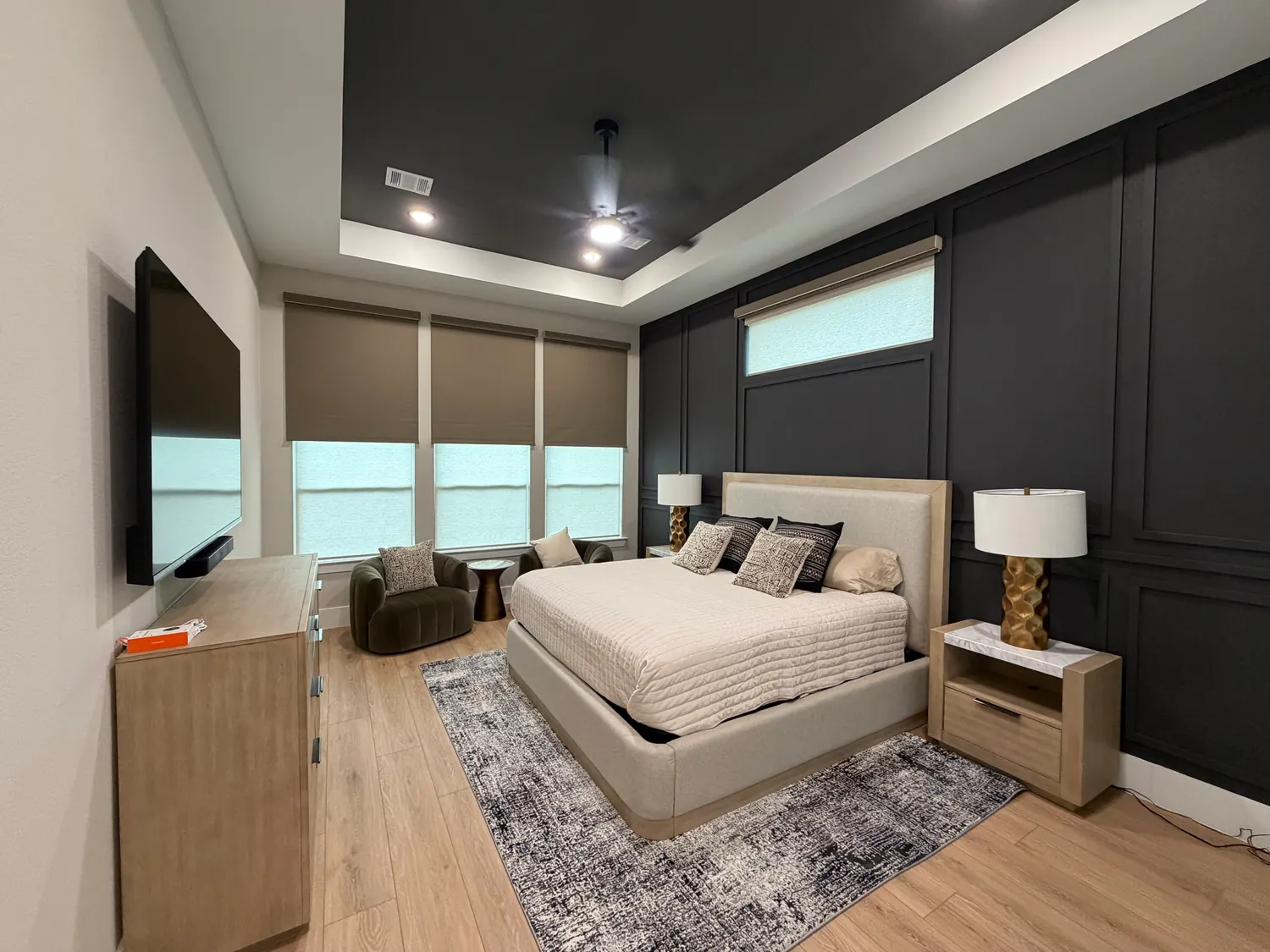
Blackout first. More control when needed.
Blackout shades use opaque fabric to cut glare, protect privacy, and make bedrooms substantially darker. For many rooms, a well-fitted standard roller shade is the right answer; dual shades and LightGuard 360 add control when the room needs more.
A standard blackout roller shade is not a compromise product. Its opaque fabric blocks light through the shade, provides full visual privacy when lowered, and reduces glare on screens. In many bedrooms, guest rooms, offices, and media spaces, that is the practical result the homeowner wants without paying for hardware the room does not need.
Mounting changes the outcome. An inside-mounted shade keeps the architecture clean but normally leaves narrow light gaps at the sides. An outside-mounted shade can overlap the opening to reduce those gaps. When daytime light and nighttime darkness both matter, a second light-filtering or solar roll creates a dual setup. When the perimeter itself must be controlled, LightGuard 360 adds dedicated top, side, and bottom channels.
Start with the simplest right answer
Standard blackout shades handle the main job. Dual layers and perimeter channels solve more specific needs.
One roller and opaque fabric block light through the shade. It is often all a bedroom, office, or media room actually needs.
A light-filtering or solar roll handles daytime while a separate blackout roll is ready for sleep or screens.
An integrated upper housing plus side and bottom channels manage the edge gaps standard shades leave behind.
A real Starlite layered installation
This Willis bedroom uses two independent rollers on each opening. The white light-filtering shades sit inside the frames for daytime privacy; the brown blackout shades mount outside and overlap the openings for stronger darkness at night.
That is one way to build a dual treatment. On compatible openings, both rolls can instead be housed in one coordinated dual cassette. We compare depth, trim, coverage, fabric roll-up, and hardware before recommending either layout.
 LightGuard 360™
A total-blackout system, installed by Starlite
Blackout fabric stops light through the material. Norman® LightGuard 360™ adds an integrated upper housing plus side and bottom channels to manage the glow a standard roller shade leaves around the perimeter.
Every opening is different. We verify fit and set honest darkness expectations before ordering.
Real Starlite installations · Videos play muted
The most common reason we install these — shift workers and light sleepers especially.
Consistent daytime naps depend on real light control, not just a dark-ish room.
For genuine home theater use, side channels matter more here than almost anywhere else.
Straight answers
We specify the whole opening, not just a dark fabric swatch.
Plan your quote
The main cost difference is often the light-control system around the fabric.
We show the expected edge conditions during the consultation so the quote matches the result you want.
Good to know
Blackout fabric stops light through the material, but standard shades can still glow around the edges. Norman LightGuard 360 adds an integrated upper housing plus side and bottom channels for total-blackout performance. Because every opening and room is different, we verify the fit and explain the realistic result before you buy.
Tracks along the sides of the window that the shade slides into, closing the gap where light normally leaks in around the edges. LightGuard 360 combines them with an integrated upper housing and bottom channel so the entire perimeter works as one system.
Yes. A dual roller shade pairs a solar or light-filtering fabric for the day with a separate blackout fabric for night. In the Willis bedroom shown here, the light-filtering roll is mounted inside the frame and the blackout roll overlaps the opening from outside. Other systems can house both rolls in one coordinated dual cassette when the opening and selected hardware allow it.
No. They are also useful in nurseries, media rooms, home offices with video work, and any west-facing room where glare is the main problem.
Yes. Motorization is especially useful for tall windows, multiple shades, or rooms where scheduled opening in the morning is part of the routine.
They can reduce direct solar gain and radiant heat near the glass, but exterior shading or insulating cellular construction may be a better answer when heat is the primary complaint.
Measured at home · Recommended honestly · Installed by Starlite
See the fabric, opacity, and hardware in the light of your own rooms before you choose. Free in-home consultation with real samples—no pressure either way.